Latest news

Kindling accompanied Greater Manchester growers and campaigners to the Stop GM (Genetic Modification) Rally in Norwich on Saturday 23rd July.

A decade ago anti-GM mass action dealt a series of blows to the biotech industry, resulting in the removal of GM from all supermarket own brands as well as the major brands as consumers and farmers roundly rejected the technology. While the last few years have not seen any field scale trials of GM crops the biotechnology industry has not been dormant, rather it's been changing tactics, sharpening its PR drive and focused on new GM products.
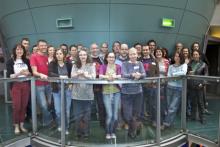
Some of Manchester's most sustainable food enterprises once again came together today, this time to explore: what is a local food system and what does it need to thrive?

Glebelands City Growers hosted a meeting of Moss Brook Growers, Unicorn Grocery, The Kindling Trust, Manchester Abundance, Hulme Community Garden Centre, DIG Food and the national organisation: Making Local Food Work, (MLFW).

A dozen volunteers spent an afternoon on Wednesday 6th July out in the countryside helping local organic growers.

Kindling spent much of Tuesday 5th July at the Food For Life Partnership Northern Awards ceremony at Manchester Town Hall, where schools and caterers were acknowledged for their hard work to increase the uptake of healthy sustainable food.


In front of a hundred delegates, eleven schools from the North of England were congratulated for their fabulous work in transforming food culture in their schools and communities.  We heard about the inspiring work going on across the North to reconnect young people with healthy food produced by local farmers.

For the past 10 years the Sainsbury Laboratory at the John Innes Centre in Norwich have been researching GM techology to provide blight resistance in potatoes, so far they have been unsuccessful. Meanwhile a number of conventionally bred blight resistant potatoes have been developed which are already available on the market - such as the impressive Sarpo varieties developed by Savari Research Trust in North Wales.

Do you fancy learning some new farming skills; spending half a day on a beautiful farm with a nice bunch of people; helping out local farmers, and being part of a wider movement to increase sustainable food production around the City?

Then Greater Manchester's Land Army is just the thing for you!

The Forgotten Fields project has begun to explore the food heritage of Westwood Park area of Eccles, near Worsley.

Forgotten Fields is a project focused on the heritage of food production and availability in Manchester from 1750’s to present day. It concentrates on six communities from across Greater Manchester that have expressed a need to explore a particular food heritage.

The 11th of June saw energy professionals, campaigners and local residents coming together to found Manchester's Carbon Coop! While pilots for the project have been run in various parts of South Manchester over the last few year, this was the point that the project was passed over to it's potential founding members. In a packed all-day meeting we hammered out details of how the Carbon Coop (and it's sister investment cooperative - the Carbon Saving Society)  would function and how they would be managed.

On the 13th of May Helen from Kindling and Alan from Manchester Veg People went to Flaxdrayton Farm in Somerset, to visit Christina Ballinger to talk producer co-ops. Christina and her husband Peter were involved in the founding of Somerset Organic Link (SOL), and SOL Producers, which was originally a producers co-operative (of which Peter was one of the producers).

Kindling presented it plans for a Greater Manchester Land Army at the Making Local Food Work conference in Sheffield on the 12th May.

The day long conference entitled: Rooting community food in an enterprising future was aiming to: help build sustainable local food systems and encourage communities to get involved in any of the diverse range of community food enterprises in existence, from Community Supported Agriculture (CSA) and group buying schemes to Farmers’ Markets and community-owned shops.